
FTA Card-Based High Throughput Direct Tuber Testing of Potato Pathogens
Webinar Summary
The development of accurate pathogen testing methods is foundational to manage plant diseases. Inaccurate testing methods combined with the inability to detect pathogens rapidly can result in crop losses and unnecessary trade restrictions. In this webinar, we will discuss how Whatman Flinders Technology Associates Plantsaver® (FTA) cards can be used in plant diagnostics allowing onsite sample collection and eliminating the need to ship perishable plant material to remote locations for testing. Using potato as a case study, we show how FTA card-based workflow coupled with PCR assays can speed up pathogen testing, primarily potato virus Y, directly from large numbers of tubers.
This webinar is great for growers, crop consultants, field scouts, diagnosticians, extension specialists and researchers.
Learning Objectives
After the webinar, attendees should be able to:
- Identify the use of FTA cards for testing plant pathogens.
- Discuss how a National Plant Diagnostic Network lab is equipped to conduct high-throughput molecular assays to support potato industry.
About the Presenters
Moderator: Chakradhar Mattupalli | Washington State University
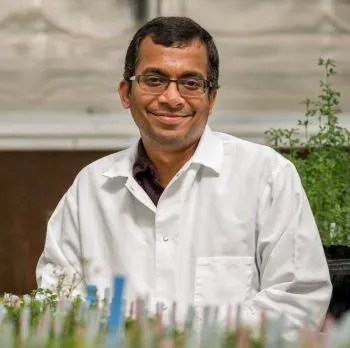 Dr. Chakradhar Mattupalli
Washington State University
Dr. Chakradhar Mattupalli is an Assistant Professor in the Department of Plant Pathology at Washington State University (WSU). He received his PhD in Plant Pathology from the University of Wisconsin-Madison and conducted postdoctoral research at Noble Research Institute, Oklahoma. Prior to joining WSU, he worked as a Research Professor and Extension Specialist at San Luis Valley Research Center, Colorado. Currently, he leads the Berry and Potato Pathology program at WSU Mount Vernon Northwestern Washington Research and Extension Center. His active translational research and Extension program focuses on understanding pathogen biology, monitoring fungicide resistance development, and developing high-throughput pathogen detection methods for sustainable disease management of blueberry and potato crops grown in Washington state and in the Pacific Northwest.
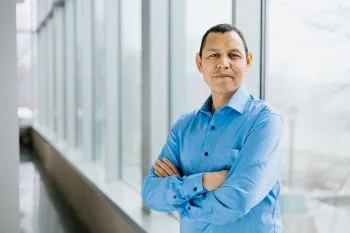 Dr. Manoj Karkee
Cornell University
Dr. Manoj Karkee is the Norman R. and Sharon R. Scott Professor at the Biological and Environmental Engineering Department at Cornell University. Prior to joining Cornell, he was the Director and Professor at the Center for Precision and Automated Agricultural Systems at Washington State University. He received his PhD in Agricultural Engineering and Human Computer Interaction from Iowa State University. Dr. Karkee leads a strong research program in the area of sensing, machine vision and #AgRobotics. He has published widely in journals such as ‘Information Fusion’, ‘Computers and Electronics in Agriculture’, ‘Journal of Field Robotics’, and ‘Journal of the American Society of Agricultural and Biological Engineers (ASABE)’. He has also been an invited speaker at numerous national and international conferences and universities. Dr. Karkee is currently serving as the Editor-in-Chief for ‘Computers and Electronics in Agriculture’, and Associate Editor of ‘Journal of the ASABE’ and has served as a guest editor for ‘Journal of Field Robotics’. He has also served as the elected chair of CIGR (International Commission of Agricultural and Biosystems Engineering) Section III - Plant Production, and IFAC (International Federation of Automatic Control) Technical Committee 8.1 - Control in Agriculture. Dr. Karkee was awarded ‘2020 Railbird Engineering Concept of the Year’ by ASABE, and was recognized as ‘2019 Pioneer in Artificial Intelligence and IoT’ by Connected World magazine.
 Divyanth Loganathan Girija
Cornell University
Divyanth Loganathan Girija is a PhD student in the Department of Biological and Environmental Engineering at Cornell University, specializing in agricultural robotics and automation. He holds an M.S. in Agricultural and Biological Engineering from Washington State University and a B.Tech. in Agricultural and Food Engineering from the Indian Institute of Technology, Kharagpur, India. His research focuses on agricultural robotics, precision agriculture, high-throughput plant phenotyping, and automation in agri-food systems. Divyanth has authored over 17 peer-reviewed publications and his work has been recognized with awards including the Foundation for Food and Agriculture Research (FFAR) Fellowship, Arnie and Marta Kegel Fellowship at WSU, MITACS Globalink Research Award by Canadian government, GripS Scholarship at Zhejiang University, and multiple poster and oral presentation awards at international conferences. He was also a visiting researcher at the University of Manitoba, Canada (2022), and Zhejiang University, China (2024). He is an active member of ASABE, IPPN, ISPA, ASA–CSSA–SSSA, and IEEE Agricultural Robotics and Automation (AgRA) committees.
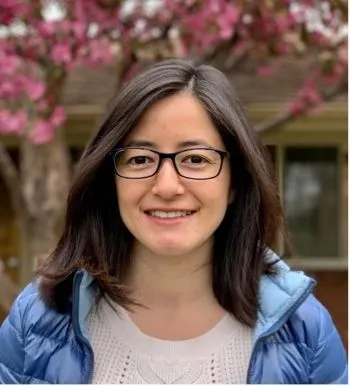 Dr. Ana Cristina Fulladolsa
University of Maryland
Dr. Ana Cristina Fulladolsa is the director of the Plant Diagnostic Laboratory at the University of Maryland. She earned her PhD in Plant Pathology at the University of Wisconsin-Madison and conducted postdoctoral research at Colorado State University, working on potato diagnostics and disease management. Dr. Fulladolsa has over 15 years of experience in diagnostics and has managed a National Plant Diagnostic Network-affiliated lab since 2018. She is dedicated to providing high-quality diagnostic services that help stakeholders make timely and informed management decisions, ultimately contributing to producing and maintaining healthy plant ecosystems. Dr. Fulladolsa leads and collaborates on research to develop improved molecular detection methods for plant pathogens, trains students and young professionals in diagnostic laboratory techniques, and provides extension and education on plant disease diagnostics and management for agricultural industry professionals.
 Dr. Melanie Filiatrault
USDA Agricultural Research Service
Dr. Melanie Filiatrault is a Research Molecular Biologist with the USDA Agricultural Research Service (USDA-ARS) Agricultural Services at the Robert W. Holley Center for Agriculture located in Ithaca, NY. She also serves as the Research Leader for the Emerging Pests and Pathogens Research Unit and is an Adjunct Professor in the Section of Plant Pathology and Plant-Microbe Biology at Cornell University, Ithaca, NY. For over 30 years, Dr. Filiatrault has conducted research on the molecular biology and microbial pathogenesis of bacterial pathogens. She has developed a national and international reputation in the use of functional genomics and transcriptomics to study bacteria. Her research also includes the development and application of molecular and genomic approaches for the detection and diagnosis of potato pathogens, supporting the identification and characterization of bacterial diseases affecting potato production. Throughout her career, she has provided training and mentorship to undergraduate and graduate researchers and postdoctoral fellows in bacterial plant pathology and potato disease research.